
Plainview’s Historical Directory Holdings
Unger Memorial Library’s local-history information sheet confirms that the library keeps back issues of local city and telephone directories. It does not publish a full title-by-title run or identify a publisher, so the dependable starting point is the library collection, not an assumed online date range. A secondary finding aid points to 1909 through 1960, but that lead needs a shelf check before it is treated as a complete Plainview run.
| Collection | Years | Where Held | Access |
|---|---|---|---|
| Plainview city directories | Back issues confirmed; 1909-1960 is an unverified secondary lead | Unger local-history collection | In person; publisher and complete run need verification |
| Reverse and criss-cross directories | Exact titles and years not located | Unger, through a front-desk referral | Visit required; staff do not provide this research by phone |
| Local telephone directories | Back issues confirmed; exact years not located | Unger local-history collection | Shelf research; conventions vary by volume |
| FamilySearch city and business directories | Broad collection, about 1749-ca. 1990 | FamilySearch | Account and image limits may apply; a Plainview year is not guaranteed |
That distinction prevents a common mistake. A catalog lead or a broad digitized collection can point toward a volume, but it does not prove that the needed year survives or is digitized. At the desk, ask to see the available years, the volume’s abbreviation key, and any street or householder index before recording conclusions.
Note: Library-held back issues are verified, while publisher names, exact directory runs, and a complete online index remain research gaps.
Unger’s Plainview Research Shelf
Unger Memorial Library, at 825 Austin Street, is the practical local repository for historical research in Plainview and Hale County. Its collection description identifies local directories, newspapers, census microfilm, yearbooks, a microfilm reader-printer, public computers, and scanning access. The front desk is the route for local-history assistance, which matters when a question depends on a physical volume rather than a keyword search.
The library’s service rules are part of the research method. Staff will not supply directory or criss-cross information by telephone. Phone or written obituary and newspaper requests need an exact date, are limited by staff time, and give in-person visitors priority. Bring a name variation, a likely year, and an address when possible. That is more likely to produce a useful referral than a broad request for every person on a street.
The Unger Memorial Library entry point shows the local public-library source used for this research.
The library is a gateway to the materials, not proof that every item is available remotely. A current library card may also open licensed resources through the reported proxy service, while the exact databases available can change.
Plainview Directory Dates Need Checking
A missing name or missing year should be recorded as a gap, not turned into a story about a family. Unger confirms back issues, but the official sheet does not give a first year, last printed year, publisher, or a volume-by-volume inventory. The 1909-1960 finding aid is useful as a question to take to the shelf, not as a promise of uninterrupted coverage.
Publication and indexing can be uneven. An address can also change form over time, and an entry may use initials, a maiden name, or a business name. Preserve the source spelling, page number, and year. Then compare the street index, a newspaper notice, a map, or a legal description before deciding that two entries refer to the same person.
Criss-Cross Research in Plainview
Reverse and criss-cross volumes reverse the usual name-first arrangement by grouping entries around addresses. Unger identifies that research category but has not published the specific titles or years. Because the staff directs these requests to an in-person referral, a researcher should plan a visit rather than expect a phone lookup or a ready-made address list.
Use such a volume as one time-stamped observation. It can help connect an address to a printed listing for a particular edition, but it does not establish current occupancy and should not be treated as a complete record of a block. For a current address trail, the Plainview street directory lookup uses the appraisal and parcel route.
- Criss-cross directory
- An address-ordered portion of a directory, useful for checking what a particular volume printed for a street or number.
- Householder index
- A listing organized around a household or address when the publisher included one; its presence must be checked in the volume.
- Abbreviation key
- The publisher’s explanation of shortened terms and symbols, often near the front of a volume and worth photographing before interpreting entries.
How a Plainview City Directory Reads
No actual Plainview directory page was publicly available for inspection during the research. The inventory below is therefore a shelf-check list, not a reconstruction of a local entry. These are field types commonly found in directories, and each must be verified against the publisher, year, and abbreviation key in hand.
| Printed name | Record the surname, given name, initials, and any spelling variation exactly as printed. |
|---|---|
| Household notation | Check whether a spouse, widow notation, or other household relationship is actually shown. |
| Occupation or business | Transcribe only the work or business detail present in that edition, without treating it as proof of identity by itself. |
| Address and telephone | Capture the number, street spelling, and telephone notation if the particular entry includes them. |
| Owner or renter mark | Look for a publisher-defined symbol, then verify its meaning in the volume rather than assuming one. |
Start with the name entry, then check the street or householder material if it exists. A notation can point to a next source, but it should not be overread. Occupation, address, and a common surname can all coincide for different people. Pair the entry with a census household, an obituary, a deed description, or a yearbook clue before making a family connection.
Plainview’s Herald Microfilm Trail
Directories are stronger when paired with the local newspaper trail. Unger reports Plainview Daily Herald microfilm back to 1908, and the Texas Tech Southwest Collection reference list separately identifies Daily Herald reels for 1930-1986 plus Evening Herald references for 1917 and 1919-1958. These are complementary holdings, not proof that the two repositories hold identical reels.
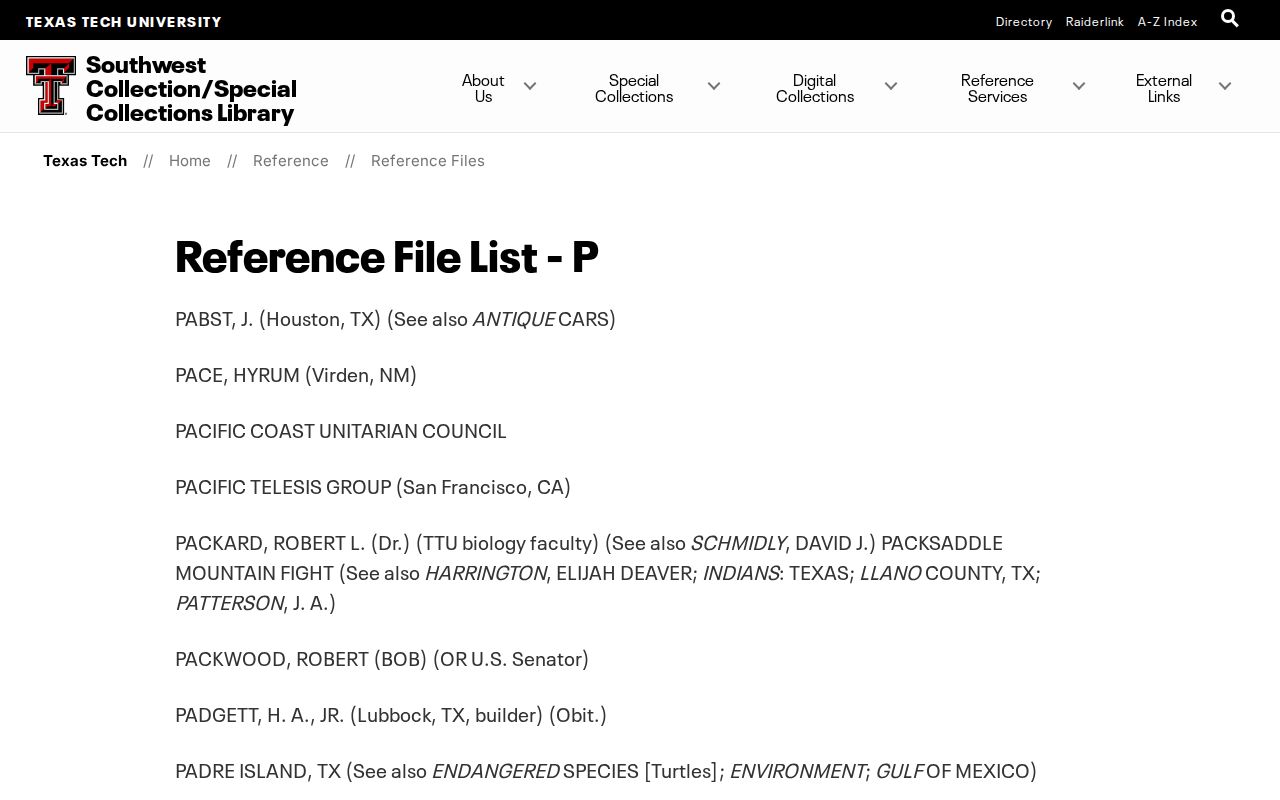
The Southwest Collection holdings page is the source for the Texas Tech microfilm lead.
Texas Tech notes that some reels are stored in a cold vault and should be requested ahead of a visit. At Unger, an obituary or newspaper request needs an exact date, so a directory year can help narrow the time window before asking staff to locate a page.
Companions to Plainview City Directories
Plainview High School’s Plain View yearbooks reach back to 1914 and can add a class year, activity, portrait, or name variant to a historical search. Hale County census microfilm is also available at Unger. Released federal schedules currently run through 1950 under the 72-year release rule, so census and directory dates need to be compared rather than treated as the same moment.
For a building or block, the 1910 Plainview Sanborn sheet at UNT and the 1914 Library of Congress map can check street and structure geography. Maps identify a physical setting, not an occupant. The library’s reported cemetery project is another endpoint, but its 2002 count and online availability need current verification with the library or cemetery office.
Note: Yearbooks, maps, census pages, obituaries, and cemetery material each answer a different question about a historical household.
Plainview’s Record-Keeping Timeline
Local chronology helps choose the right shelf and period. The post office, county-seat role, newspapers, railroad, and incorporation all provide practical starting markers for a search. They explain why an early household may appear in newspapers or county records before a surviving directory lead is found.
| 1887 | Plainview’s post office opened. |
|---|---|
| 1888 | Hale County organized, with Plainview as county seat. |
| 1889 | The Hale County Hesperian began publication. |
| 1906-1907 | Rail service reached the area and Plainview incorporated in 1907. |
| 1914 | The locally held Plain View yearbook run begins. |
The Texas State Historical Association chronology and population series give context for a directory gap, but they do not identify a particular household. A sudden absence may reflect coverage, a name change, a move, or an unlisted person. The source date and the source’s purpose still control the conclusion.
Trace a Plainview City Directory Household
Follow one household across the closest available volumes rather than searching for a perfect uninterrupted series. Use the same name variants in nearby years, and compare the address with census and map material. This approach respects what each source can show while leaving unsupported gaps visible.
- Find the first available directory entry and record the exact name, address, telephone detail, occupation or business detail, page, and any street-index reference.
- Check the nearest available edition before and after it. A different number or spelling is a lead to test, not proof that the household vanished.
- Compare the address with a released federal census year, using age, birthplace, and household relationships to separate people with similar names.
- Use the street index, Sanborn map, deed legal description, or a Herald notice to test whether an address change represents the same place.
- Close the trail with an exact-date obituary request, cemetery material, probate or heirship records, or a recorded deed chain when those sources fit the question.
A disappearance from a volume can mean a move, death, changed listing style, or no listing at all. Preserve that uncertainty. For a modern name question, the official current records and the Plainview resident lookup provide a separate verification path.